health threetrees com vn – The Complete Guide to Modern Wellness
In the modern era, the pursuit of health has become paradoxically complex. We are inundated with hyper-specific diets, biohacking trends, high-intensity interval training (HIIT) regimens, and an endless stream of wellness products. Yet, global rates of chronic illness, burnout, and mental fatigue continue to rise. The missing link in contemporary wellness is not a lack of information, but a lack of integration. True health is not a series of isolated, extreme interventions. Instead, it is a continuous, harmonious ecosystem—a philosophy fundamentally embodied by the digital health guide health threetrees com vn.
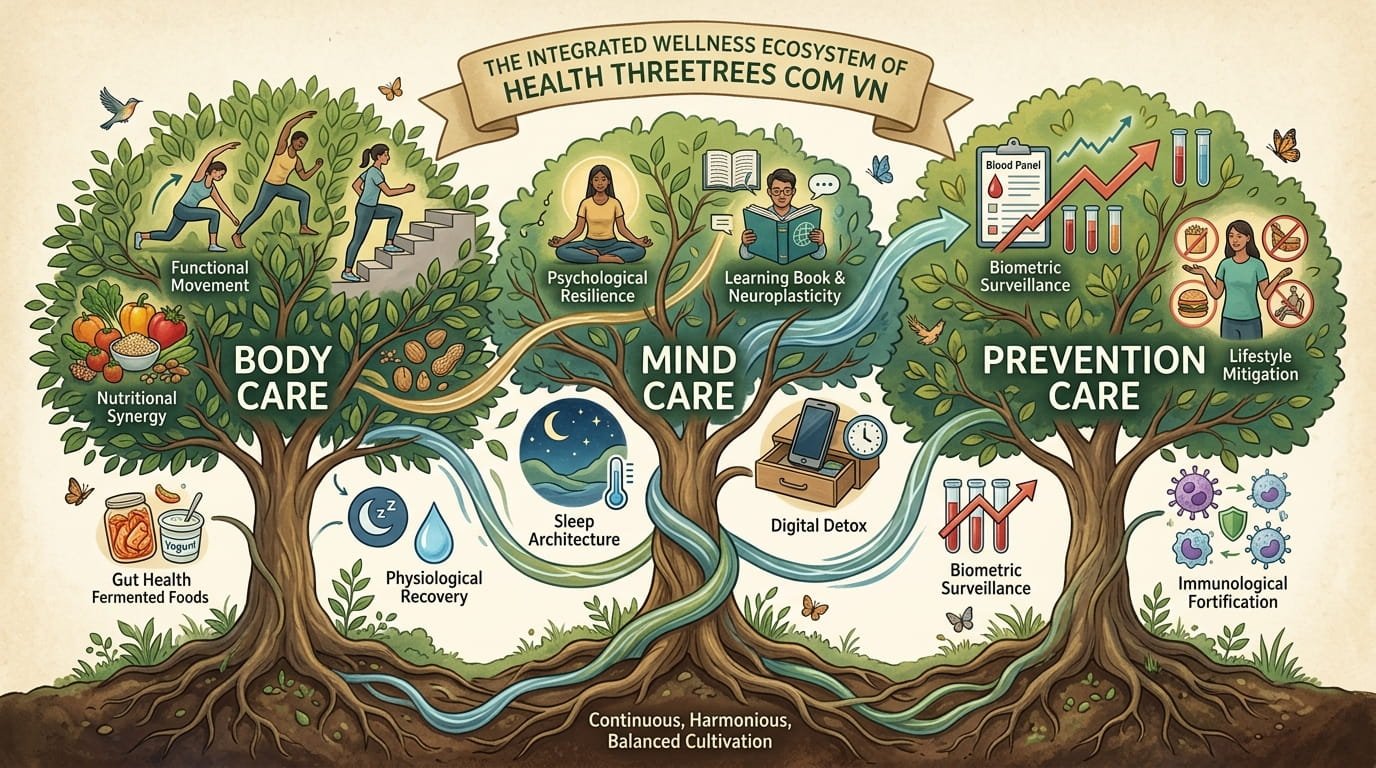
Much like a tree requires deep roots, a sturdy trunk, and adaptive branches to weather the elements, human vitality relies on the balanced cultivation of three core pillars: Body Care, Mind Care, and Prevention Care. When any one of these pillars is neglected, the entire structure becomes unstable. An elite athlete with severe chronic stress is not truly healthy; a person with an immaculate mindfulness practice who neglects physical movement is equally compromised. This comprehensive guide explores the deep-dive science, actionable strategies, and psychological frameworks required to master all three pillars, allowing you to transition from merely surviving to genuinely thriving under the principles of health threetrees com vn.
Pillar 1: Body Care – Redefining Physical Vitality
Physical wellness is the most visible aspect of health, but it is also the most frequently misunderstood. Popular media often equates physical fitness with aesthetic perfection—six-pack abs, restrictive calorie counting, and grueling gym sessions. The philosophy behind the health threetrees com vn framework strips away this superficial layer, redefining body care as the optimization of our biological machinery through functional movement, intentional nutrition, and fundamental physiological recovery.
1.1 The Science of Functional Movement vs. Sedentary Dynamics
For decades, exercise was viewed as a transactional activity: you burn calories to offset the food you consume. Modern physiology reveals a much more complex reality. Sitting for eight to ten hours a day cannot be completely “undone” by a single 45-minute workout. Prolonged sitting suppresses an enzyme called lipoprotein lipase, which is essential for burning fat and managing cardiovascular risk. Therefore, physical movement must be woven into the fabric of daily life. This is achieved through maximizing NEAT (Non-Exercise Activity Thermogenesis)—the energy expended for everything we do that is not sleeping, eating, or sports-like exercise.
- The Micro-Movement Framework: Incorporate “exercise snacks” throughout the day. Set a timer for every 50 minutes of sedentary work, followed by 3 to 5 minutes of movement. This could include bodyweight squats, calf raises, or dynamic stretching to keep the metabolic rate elevated.
- The Incline Advantage: Opting for the stairs instead of an elevator or walking uphill actively engages the gluteal muscles and posterior chain, correcting the postural imbalances caused by prolonged sitting.
- Biomechanical Longevity: Focus on joint mobility and flexibility. A body that cannot move through its natural range of motion without pain will eventually abandon movement altogether. Simple routines like morning mobility flows or evening yoga preserve the integrity of the musculoskeletal system, which is a core physical health recommendation found on health threetrees com vn.
1.2 Nutritional Synergy: Eating for Cellular Optimization
The human body is a self-repairing organic machine, and nutrition provides the raw materials for that repair. Rather than focusing on restrictive diets that induce psychological stress and hormonal downregulation, the focus must shift toward Nutritional Synergy—consuming foods that work in tandem to optimize cellular function, reduce systemic inflammation, and support the gut microbiome.
The Whole-Foods Directive
The foundational rule of modern nutrition is simple: eat foods that look like they did when they came out of nature.
- Phytochemical Diversity: Consuming a wide array of colorful fruits and vegetables introduces diverse antioxidants into the body. These compounds neutralize free radicals, which are unstable molecules that cause cellular damage and accelerate aging.
- Complex Carbohydrates over Refined Sugars: Swap out refined white flour and processed sugars for complex carbohydrates like quinoa, sweet potatoes, and oats. These provide a sustained, slow release of glucose into the bloodstream, preventing the sharp insulin spikes that cause energy crashes and promote fat storage.
- Healthy Fats for Brain Architecture: The human brain is composed of nearly 60% fat. Consuming monounsaturated and polyunsaturated fats—found in avocados, nuts, seeds, and wild-caught fish—is critical for maintaining the structural integrity of neurons and facilitating cell-to-cell communication.
The Gut-Brain Axis
Your gastrointestinal tract is lined with millions of nerve cells, often referred to as the “second brain.” The trillions of bacteria residing in your gut (the microbiome) dictate everything from your digestive efficiency to the production of neurotransmitters like serotonin (the happy chemical). Incorporating fermented foods (like yogurt, kefir, or kimchi) and prebiotic fibers (like garlic, onions, and bananas) ensures a diverse, thriving microbiome that directly enhances both mood and physical vitality.
1.3 Physiological Recovery: The Unsung Hero of Body Care
Movement and nutrition are worthless without adequate recovery. When we exercise, we are actually breaking down muscle tissue and inducing acute stress on the body. It is during the recovery phase that the body adapts, repairs, and grows stronger.
- Hydration Architecture: Water is the fundamental solvent for every biochemical reaction in the human body. Dehydration by as little as 2% can impair cognitive performance, decrease physical strength, and slow down metabolism. A professional approach to hydration involves drinking consistently throughout the day, ensuring that water intake is accompanied by essential electrolytes (sodium, potassium, magnesium) to facilitate true cellular absorption.
- Circadian Alignment: Aligning your feeding and sleeping patterns with the natural light-dark cycle of the earth optimizes metabolic health. Avoid heavy meals within three hours of bedtime, allowing your digestive system to rest and recover during the night while your body focuses on cellular repair.
Pillar 2: Mind Care – Cultivating Psychological Resilience
The mind and the body are not separate entities; they are a deeply integrated feedback loop. Psychological stress manifests physically as muscle tension, elevated heart rate, and systemic inflammation. Conversely, a chaotic, unoptimized lifestyle rapidly degrades mental clarity. Mind Care is the deliberate practice of managing cognitive load, processing emotions constructively, and cultivating a state of internal serenity amidst external chaos, matching the wellness ethos of health threetrees com vn.
2.1 Cognitive Stamina and Neuroplasticity
The human brain possesses an incredible trait known as neuroplasticity—the ability to reorganize itself by forming new neural connections throughout life. However, neuroplasticity is a double-edged sword. If you expose your brain to constant distraction, short-form media, and chronic worry, it adapts to become highly efficient at being distracted and anxious.
To build cognitive stamina, you must challenge your brain with focused, intentional stimuli:
- The Novelty Principle: Learning a new language, mastering a musical instrument, or taking up complex hobbies forces the brain to build entirely new neural pathways. This creative problem-solving increases what psychologists call “cognitive reserve,” which protects the brain against age-related cognitive decline.
- Active Over Passive Consumption: Instead of passively scrolling through social media or binge-watching television, engage in active cognitive consumption. Read challenging literature, play strategic games like chess, or participate in stimulating debates. This keeps the prefrontal cortex—the seat of executive function and decision-making—sharp and active.
2.2 Sleep Architecture: The Ultimate Mental Cleanse
Sleep is not a passive state of inactivity; it is an active, highly coordinated neurological process. During sleep, specifically during deep slow-wave sleep and REM (Rapid Eye Movement) sleep, the brain undergoes a literal cleansing process. The glymphatic system clears out metabolic waste products, including amyloid-beta plaques, which are linked to neurodegenerative disorders. Furthermore, sleep is when memory consolidation occurs—turning short-term daily experiences into long-term knowledge.
To optimize your sleep architecture, consider the following blueprint based on parameters regularly discussed by health threetrees com vn:
| Sleep Component | Optimal State | Practical Strategy |
| Environmental Temperature | Cool (~65°F / 18°C) | Use breathable bedding; lower the thermostat before bed. |
| Light Environment | Absolute Darkness | Use blackout curtains; eliminate all LEDs and standby lights. |
| Chemical Stimulants | Zero Caffeine post-2 PM | Avoid caffeine for at least 8 hours prior to intended sleep. |
| Neurological Transition | Wind-Down Window | Dedicate 60 minutes before bed to screen-free relaxation. |
By treating sleep as a non-negotiable medical asset rather than a luxury, you drastically improve emotional regulation, working memory, and focus.
2.3 Digital Detoxification and Attention Management
We live in an attention economy, where applications are engineered to trigger sudden bursts of dopamine—the reward neurotransmitter. This constant hyper-stimulation fractures our attention span and keeps our nervous system in a low-grade, chronic state of fight-or-flight.
- The Dopamine Fast: Implement a daily digital boundaries practice. Establish “tech-free zones” in your home, particularly the bedroom and the dining table. For the first 30 minutes after waking up and the last 30 minutes before sleeping, do not touch your phone. This simple boundary allows your brain to transition naturally between states of consciousness without being hijacked by notifications.
- Mindfulness and Cortisol Management: Mindfulness is not mystical; it is practical neurology. When you practice deep, diaphragmatic breathing or focused meditation, you stimulate the vagus nerve. This activates the parasympathetic nervous system (the “rest and digest” branch), which actively lowers your heart rate, dilates blood vessels, and reduces the production of cortisol and adrenaline.
Pillar 3: Prevention Care – Structuring Proactive Longevity
The traditional medical model is largely reactive: you wait until you get sick, and then you seek treatment. This is known as “sick-care.” Platforms like health threetrees com vn champion true Health-Care through Prevention Care—the strategic design of a lifestyle that minimizes systemic vulnerability and maximizes lifespan (how long you live) alongside healthspan (how long you live free from chronic disease).
3.1 Biometric Surveillance: Knowing Your Data
You cannot manage what you do not measure. Waiting for physical symptoms to appear is often too late, as many metabolic and cardiovascular diseases develop silently over decades. A professional preventive care strategy requires proactive biometric monitoring.
- Comprehensive Blood Biomarkers: At a minimum, individuals should obtain annual blood panels. Beyond basic blood counts, these panels should assess metabolic markers such as HbA1c (a three-month average of blood sugar levels), fasting insulin, high-sensitivity C-reactive protein (hs-CRP to measure systemic inflammation), and an advanced lipid profile (including ApoB, which provides a highly accurate picture of cardiovascular risk).
- Trend Tracking: Do not look at your lab results as static numbers. A biomarker that is technically within the “normal reference range” but has been steadily climbing for three consecutive years indicates an underlying trend that needs to be addressed immediately through lifestyle adjustments as suggested by modern preventive guides like health threetrees com vn.
3.2 Lifestyle Mitigation: Eliminating Chronic Drivers
The primary drivers of modern mortality are non-communicable lifestyle conditions: cardiovascular disease, type 2 diabetes, chronic respiratory diseases, and oncological conditions. The overwhelming majority of these conditions are influenced by daily habits.
- Glycemic Volatility Management: Chronic elevations in blood glucose lead to insulin resistance, visceral fat accumulation, and cellular damage. Prevention care means minimizing high-glycemic index foods and implementing simple hacks to flatten your glucose curve—such as eating vegetables and proteins before carbohydrates during a meal, or taking a short walk immediately after eating to allow your muscles to absorb glucose directly without requiring massive insulin output.
- Toxin Elimination: Eliminating smoking and vaping, and drastically reducing alcohol intake, are among the highest-return investments you can make for your healthspan. Alcohol, even in moderation, is a known neurotoxin and carcinogen that disrupts sleep patterns and degrades the structural integrity of the gut lining.
3.3 Immunological Fortification
The human immune system is an incredibly complex network of cells, tissues, and organs that constantly defends the body against pathogenic invaders and cellular mutations. Fortifying this system requires a foundation of clean living paired with targeted support.
- Micronutrient Optimization: Ensure adequate intake of critical vitamins and minerals that modulate immune activity. Vitamin D3 acts more like a hormone than a vitamin, regulating thousands of genes involved in immune function. Zinc is essential for the development and activation of T-lymphocytes, while Vitamin C protects immune cells from the oxidative stress generated during an infection.
- The Power of Physical Barriers: Prevention also extends to basic environmental hygiene. Ensuring clean air through high-quality HEPA filters in your living space and staying updated on recommended vaccinations provides an essential layer of defense against seasonal and chronic threats alike.
The Synergy of the Three Trees: A Synthesis Framework
Understanding the three pillars individually is insightful, but the true transformation occurs when they are executed simultaneously. They do not operate in silos; they are deeply interdependent. This interconnectedness is exactly what makes the health threetrees com vn methodology so highly effective for sustainable daily life.
Consider how a failure in one pillar undermines the others:
- If you ignore Mind Care (high stress), your body produces excess cortisol, which causes cravings for high-sugar foods, destroying Body Care.
- If you ignore Body Care (poor diet and zero movement), you develop systemic inflammation, which directly interferes with neurotransmitter production, destroying Mind Care.
- If you ignore Prevention Care (skipping check-ups and tracking), an underlying metabolic issue can suddenly manifest as a medical crisis, instantly shattering both physical vitality and mental stability.
Conversely, look at how a positive action in one pillar cascades beautifully into the others:
+-----------------------------------------------------------------+
|               THE SYSTEMIC WELLNESS CASCADE                     |
+-----------------------------------------------------------------+

   [PILLAR 1: BODY CARE]
   Take a 20-minute daily walk
            │
            ▼ Reduces systemic inflammation & balances blood glucose
            │
   [PILLAR 2: MIND CARE]
   Calms the nervous system, lowers cortisol, & improves deep sleep
            │
            ▼ Drives long-term healthspan & lowers chronic disease risk
            │
   [PILLAR 3: PREVENTION CARE]
   Protects biometric integrity & reduces medical reliance
This integrated approach shifts your focus from perfection to consistency. You do not need to execute every single strategy flawlessly today. Instead, focus on small, compounding improvements across all three domains.
Conclusion: Designing Your Sustainable Wellness Blueprint
Achieving optimal health is not an overnight event, nor is it a rigid destination. It is a lifelong practice of nurturing your individual ecosystem. The framework pioneered by health threetrees com vn teaches us that our daily choices are the ultimate determinants of our long-term vitality.
To transition this knowledge into action, avoid the temptation to completely upend your lifestyle tomorrow morning. Choose one small action from each pillar to implement this week:
- For your Body: Commit to taking a 10-minute walk after lunch every single day.
- For your Mind: Put your smartphone in a drawer 45 minutes before going to bed.
- For your Prevention: Schedule that routine blood panel or medical check-up you have been putting off.
By managing your body with intention, cultivating a peaceful mind, and actively safeguarding your future with the strategies detailed by health threetrees com vn, you build a resilient, deeply rooted foundation. You stop managing illness and start mastering life. The best time to plant a tree was twenty years ago; the second best time is today. Begin growing your wellness ecosystem now.
Frequently Asked Questions (FAQs)
Q1: Can I focus on one pillar at a time, or do I have to work on all three simultaneously?
While you don’t need a flawless routine in every area overnight, it is best to make small, parallel improvements across all three pillars. Because your body, mind, and preventive choices are biochemically connected, neglecting one completely will eventually pull the others down. The methodology of health threetrees com vn emphasizes that balancing these elements together creates a sustainable foundation for wellness.
Q2: I have a very hectic schedule. What is the single highest-return habit I can start with?
If you are short on time, prioritize optimizing your sleep hygiene. Quality sleep acts as a bridge between Body Care and Mind Care. It regulates hunger hormones (reducing cravings), clears metabolic waste from the brain, lowers cortisol, and keeps your immune system sharp. Fixing your sleep schedule gives you the energy and clarity needed to implement the wider suggestions found on health threetrees com vn.
Q3: What is the difference between standard “medical care” and the “Prevention Care” pillar?
Standard medical care is primarily reactive—it diagnoses and treats a disease after symptoms appear. Prevention Care, as championed by guides like health threetrees com vn, is proactive. It uses lifestyle choices, daily habits, and biometric tracking (like blood markers) to catch potential health risks early, avoiding the disease entirely.
Q4: How do I know if my “Mind Care” practices are actually working?
Progress in mental wellness is often measured by emotional resilience and cognitive clarity. You will know your mind care practices are working when you notice fewer extreme emotional drops in response to daily stressors, improved sustained focus during demanding tasks, a lower resting heart rate, and an easier transition into deep sleep.
Q5: Do I need to buy expensive foods or supplements to fulfill the health threetrees com vn guidelines?
Absolutely not. The core philosophy of health threetrees com vn emphasizes simplicity and accessibility. The physical care pillar relies on eating whole, local, single-ingredient foods—such as fresh vegetables, legumes, and whole grains—and drinking adequate water. Supplements should only be used to fill specific, doctor-tested nutritional gaps, not to replace real food.