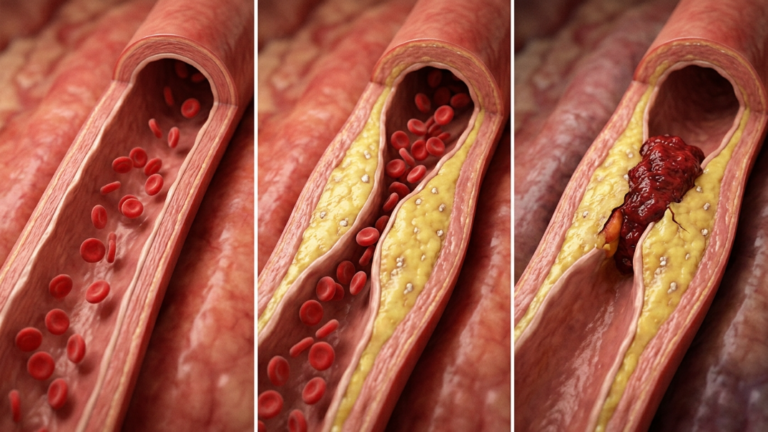
The Ultimate Guide to Probiotics: Benefits, Gut Health, Women’s Health, and Best Practices
In today’s fast-paced world, digestive issues, low energy levels, and weakened immune systems have become increasingly common. Often, the root cause of these health challenges lies deep within our digestive tract—specifically within our gut microbiome. This is where probiotics enter the conversation as one of the most vital components of modern nutrition and wellness.
Whether you are looking to improve your overall digestion, clear up uncomfortable bloating, boost your immunity, or support specific areas like women’s urogenital health, understanding how live bacteria interact with your body is essential. In this comprehensive guide, we will explore everything you need to know about probiotics, prebiotics, dietary sources, and supplements to help you optimize your health.
What Are Probiotics and How Do They Work?
To understand what are probiotics, it helps to look at the human body as a complex ecosystem. Your body, especially your gastrointestinal tract, is home to trillions of microorganisms, including bacteria, fungi, and viruses. Collectively, this ecosystem is known as the gut microbiome.
While the word “bacteria” often carries a negative connotation associated with illness and infection, your body actually relies on billions of beneficial micro-organisms to function correctly. Probiotics are defined as live probiotics—friendly microorganisms (mostly strains of beneficial bacteria and certain yeasts) that provide health benefits when consumed in adequate amounts.
So, what do probiotics do once they enter your body?
- Restoring Balance: They help maintain a healthy balance between beneficial and harmful bacteria in your gut.
- Pathogen Protection: They crowd out harmful bacteria by competing for nutrients and space on the intestinal wall.
- Barrier Function: They strengthen the intestinal lining, preventing toxins and unwanted substances from leaking into the bloodstream.
- Biochemical Production: They assist in breaking down food and producing essential nutrients, including short-chain fatty acids (SCFAs) and vitamins like B12 and K.
Many people wonder: do probiotics work? The short answer is yes—extensive scientific research confirms that introducing specific strains of live bacteria can measurably improve digestive efficiency, immune responses, and metabolic health.
Prebiotics vs Probiotics: Understanding the Core Difference
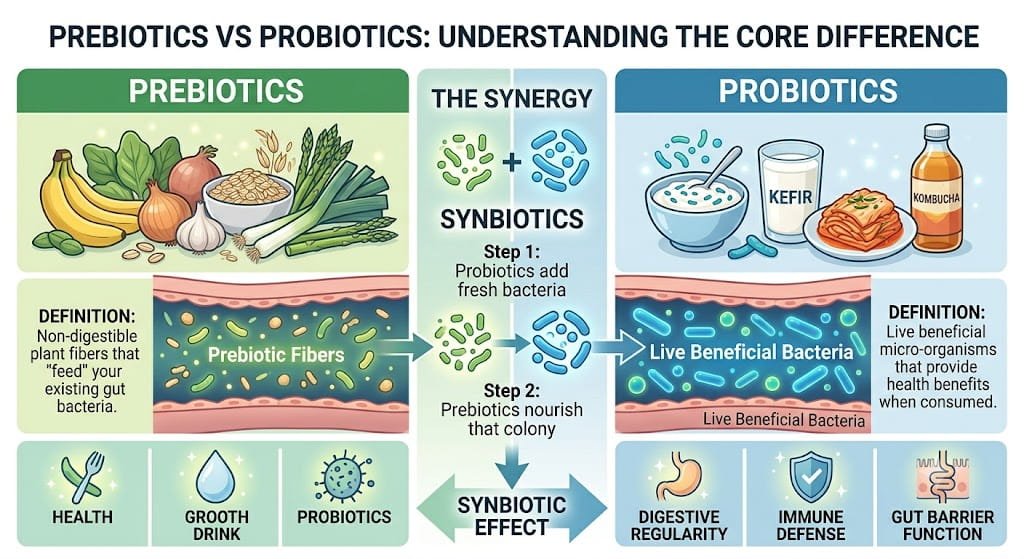
It is common to confuse prebiotics vs probiotics, or wonder how prebiotics and probiotics interact within the body. Although they sound similar, they play entirely different, complementary roles in digestive health.
| Feature | Probiotics | Prebiotics |
| Definition | Live beneficial bacteria and yeasts | Specialized plant fibers and nondigestible carbohydrates |
| Function | Adds good bacteria directly to the microbiome | Acts as “food” to nourish existing good bacteria |
| Sources | Fermented foods (Yogurt, Kefir) & Supplements | High-fiber foods (Bananas, Oats, Garlic, Onions) |
| Role | Colonizes and balances the gut | Stimulates growth and activity of healthy strains |
Think of your gut as a garden. Probiotics are the fresh seeds you plant to grow healthy flowers, while prebiotics are the fertilizer and water that feed those seeds so they can thrive. For optimal gut health, incorporating both into your daily routine creates a powerful synergistic relationship known as synbiotics.
The Science of Gut Health: Why Your Microbiome Matters
Your gut is far more than a simple food processing tube—it is effectively the control center for many critical bodily systems. The term gut health probiotics refers to the targeted use of beneficial bacteria to keep this central hub working smoothly.
Proper probiotics for digestive health matter because your gut microbiome directly influences:
- The Gut-Brain Axis: Your gut produces a large percentage of the body’s neurotransmitters, including serotonin. A balanced gut supports mood stability and mental clarity.
- Immune Resilience: Approximately 70% to 80% of your immune cells reside in the gut mucosal lining. Probiotics keep this defense system alert without causing chronic inflammation.
- Nutrient Absorption: Without healthy microflora, your body cannot efficiently extract vitamins, minerals, and micronutrients from the food you eat.
Maintaining a thriving microbial environment prevents harmful conditions like dysbiosis (an imbalance of microflora), which is linked to chronic digestive discomfort, fatigue, and systemic health issues.
Top Benefits of Probiotics for Overall Health
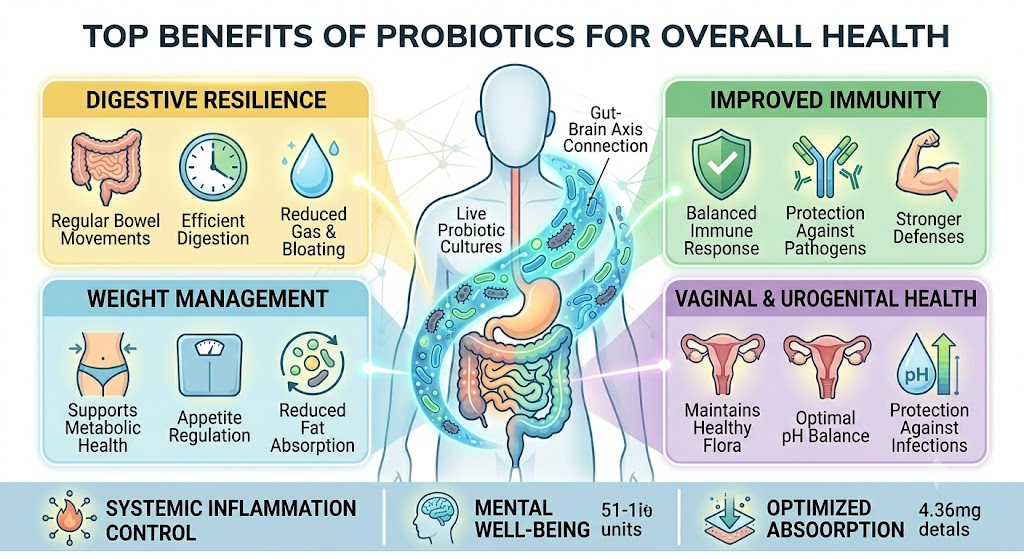
While a balanced microbiome begins in the gut, the essential benefits of probiotics extend throughout the entire body. When the gut environment is optimized, systemic health thrives. Scientists now understand that a thriving bacterial ecosystem is not just luxury; it is foundational to human vitality.
Comprehensive probiotics benefits include:
- Immune System Modulation: A balanced gut prevents your immune system from overreacting (causing allergies or autoimmune issues) and underreacting (making you vulnerable to infections).
- Enhanced Mental Health: Often called the “second brain,” your gut produces critical neurotransmitters like serotonin and dopamine. Probiotics support a healthy gut-brain axis, potentially reducing anxiety and improving mood.
- Skin Health Improvement: Conditions like acne, eczema, and rosacea are often linked to gut inflammation. Probiotics can help soothe systemic inflammation, reflecting a clearer complexion.
When asking what are probiotics good for, the scope is vast, influencing cardiovascular health, metabolic function, and resilience against environmental toxins.
Probiotics for Digestion: Bloating, Gas, and Constipation
The most immediate and common application of beneficial bacteria is addressing gastrointestinal discomfort. Millions of people suffer daily from non-specific digestive distress. Probiotics for digestive health offer a natural pathway to restore comfort.
Managing Bloating and Gas
Severe, uncomfortable swelling in the abdomen is often caused by an overgrowth of gas-producing bacteria. Probiotics for bloating and gas function by balancing these microbial populations, ensuring that fermentation processes are efficient and do not create excess trapped gas. Regular consumption of probiotics for bloating helps break down complex carbohydrates more effectively, a leading cause of distension.
Relieving Constipation
When digestion slows down, it leads to discomfort. Probiotics for constipation work by decreasing the pH level in the colon, which helps create a slightly acidic environment that speeds up peristalsis (the wave-like muscle contractions that move waste along). If you find yourself asking do probiotics make you poop, the answer is indirectly yes, by optimizing the environment and transit time for regular bowel movements.
Probiotics and Weight Loss: Can Good Bacteria Help Burn Fat?
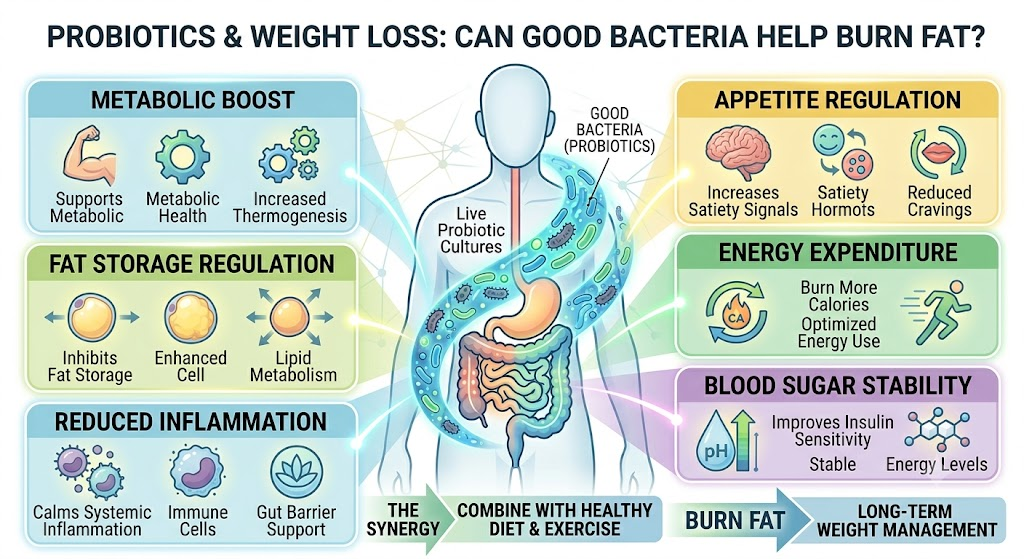
A fascinating new frontier in microbiome science is the connection between probiotics and weight loss. Research indicates that the composition of your gut bacteria may influence your metabolism, how you store fat, and your appetite signals.
Studies have compared the microbiome of lean individuals with obese individuals, finding significant differences in microbial diversity. The potential mechanisms by which probiotics for weight loss work include:
- Appetite Regulation: Healthy bacteria may increase the release of satiety (fullness) hormones, reducing overall calorie intake.
- Fat Storage Inhibition: Certain strains may inhibit the absorption of dietary fat, increasing the amount excreted.
- Reduced Inflammation: Gut inflammation is strongly linked to obesity; probiotics can help lower systemic inflammation levels.
While not a magic pill, when asking about probiotics and weight loss, the evidence suggests they provide critical support when combined with a healthy diet and lifestyle.
Women’s Health: Why Women Need Specialized Probiotics
While gut health is universal, women’s biological systems present unique microbial needs. Fluctuations in hormones during menstruation, pregnancy, and menopause directly influence microbial diversity. For this reason, selecting the best probiotics for women involves looking beyond general gut strains to include specific species that populate the urogenital tract.
Targeted probiotics for women focus heavily on strains like Lactobacillus rhamnosus and Lactobacillus reuteri. These specific beneficial bacteria are naturally abundant in healthy female anatomy and serve as a frontline defense against opportunistic infections.
(Caption: A scientific illustration showing how targeted probiotics help maintain vaginal flora balance and lower infection risk.)
Vaginal Probiotics: Protecting Against BV and Infections
The vaginal environment thrives in a slightly acidic state (typically a pH between 3.8 and 4.5). This acidity prevents harmful bacteria and yeast from multiplying out of control. When this delicate equilibrium breaks down, issues like Bacterial Vaginosis (BV) or yeast infections occur.
Preventing and Managing BV
Bacterial Vaginosis is characterized by an overgrowth of atypical bacteria in the vagina. Utilizing probiotics for bv and probiotics for bacterial vaginosis works by reintroducing dominant Lactobacillus strains. These strains produce lactic acid and hydrogen peroxide, restoring healthy acidity and helping clear discomfort.
Complete Urogenital Support
For women prone to recurrent urinary tract issues or vaginal imbalances, vaginal probiotics and specialized uro probiotics provide targeted defense. Incorporating probiotics for vaginal health helps maintain a protective microbial shield across both the urinary and vaginal tracts, cutting down the frequency of chronic infections.
Natural Probiotics Foods: What to Eat for a Healthy Gut
While convenience often leads people toward pill bottles, obtaining live micro-organisms from whole food sources remains one of the most effective and time-tested methods. Eating a wide variety of probiotics foods introduces diverse bacterial strains while simultaneously supplying your body with essential vitamins, minerals, and digestive enzymes.
(Caption: A collection of rich, natural probiotic foods including yogurt, kefir, kimchi, and sauerkraut that support digestive health.)
When looking to incorporate foods with probiotics into your daily meals, prioritize traditional fermented products:
- Yogurt & Kefir: Dairy (or non-dairy) fermented with active cultures. Kefir contains multiple strains of friendly bacteria and beneficial yeasts.
- Sauerkraut & Kimchi: Fermented cabbage dishes loaded with Lactobacillus bacteria, as well as immune-boosting vitamins A and C.
- Miso & Tempeh: Traditional fermented soybean products popular in Asian cuisine, offering rich flavor along with high microbial counts.
- Kombucha: A fermented, naturally effervescent tea drink packed with healthy gut microflora.
Choosing natural probiotics through your daily diet gives your digestive system a steady, gentle supply of microflora to maintain dynamic balance.
Probiotics Supplements: Tablets, Capsules, and Powders
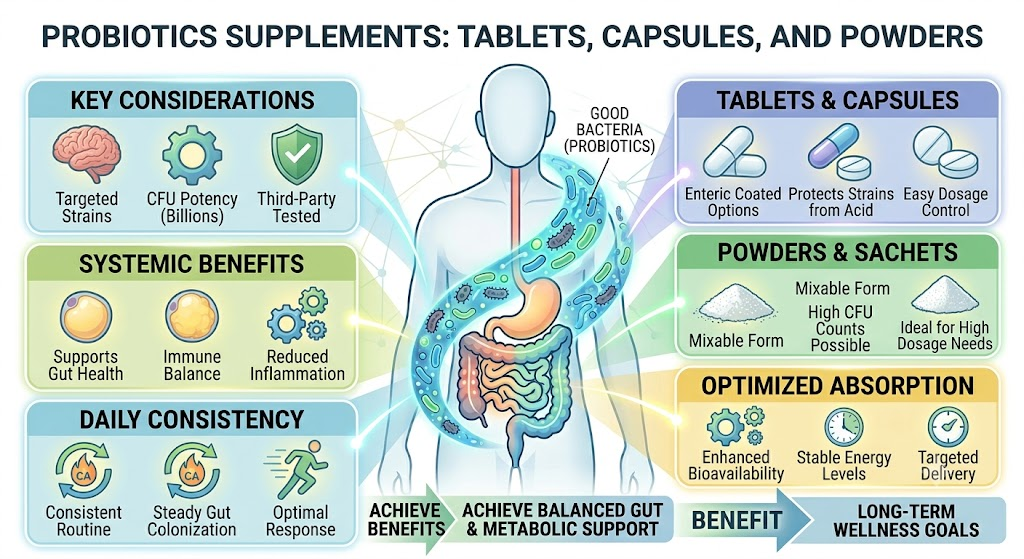
While food sources are ideal, modern lifestyles, dietary restrictions, or specific clinical needs often call for higher, targeted doses. This is where probiotics supplements become essential.
When shopping for the best probiotics, it helps to understand the different forms available:
- Probiotics Tablets & Capsules: The most common form. High-quality capsules feature enteric coatings designed to protect fragile live bacteria from harsh stomach acid, ensuring they reach your intestines intact.
- Powders & Sachets: Ideal for individuals who dislike swallowing pills or require higher CFU (Colony Forming Units) counts.
- Targeted Formulations: Specialized options, such as the best probiotics for gut health, combine specific strains designed to target complex issues like IBS, systemic inflammation, or post-antibiotic recovery.
Whether choosing a daily probiotics supplement or relying on diet, checking for high CFU counts (typically 10 to 50 billion CFUs) and multi-strain formulas ensures maximum effectiveness.
Best Time to Take Probiotics for Maximum Absorption
To get the most out of your supplement, timing matters. Knowing when to take probiotics can significantly impact how many live bacteria survive the journey through your stomach acid.
The best time to take probiotics is generally:
- 30 minutes before a meal, or right at the beginning of a meal containing healthy fats.
- Stomach acid is at its lowest levels when the stomach is empty or just beginning to process food, allowing more live organisms to reach the intestines unharmed.
- Consistency is key—take them at the same time every day to keep bacterial colonies stable.
Probiotics and Antibiotics: Safe Usage Guide
Antibiotics are crucial for fighting bacterial infections, but they don’t discriminate—they wipe out both bad and good bacteria. This often leads to digestive upset or secondary infections.
Combining probiotics and antibiotics correctly is simple:
- Can you take probiotics with antibiotics? Yes, but do not take them at the exact same time of day.
- Spacing: Take your probiotic at least 2 to 3 hours apart from your antibiotic dose so the medication doesn’t immediately kill off the probiotic bacteria.
- Post-Treatment: Continue taking your probiotic for 2 to 4 weeks after finishing your antibiotics to rebuild a healthy microbiome.
How Long Does It Take for Probiotics to Work?
If you are wondering how long does it take for probiotics to work, the timeline depends on what you are treating:
- Bloating & Digestion: Improvements can often be felt within 3 to 7 days.
- Constipation & Diarrhea: Noticeable changes usually occur within 1 to 2 weeks.
- Vaginal Flora & BV: Urogenital microflora balance typically takes 2 to 4 weeks of consistent use.
- Immune & Overall Gut Health: Long-term colonization and systemic benefits develop after 30 to 60 days.
Signs Probiotics Are Working (and What Side Effects to Expect)
Clear signs probiotics are working include:
- Reduced bloating, gas, and abdominal pressure.
- More regular, formed bowel movements.
- Improved energy levels and reduced brain fog.
- Better skin clarity and fewer recurrent vaginal or urinary tract issues.
Note: During the first 3 to 5 days, you might experience mild gas or slight changes in stool as your microbiome rebalances. This is normal and temporary.
Conclusion: Taking Control of Your Gut Health
Understanding the vital role of probiotics in human health is one of the most transformative steps you can take toward long-term wellness. From restoring digestive comfort and clearing up uncomfortable gas to targeted solutions for women’s health, vaginal microflora balance, and fat metabolism, these microscopic powerhouses influence almost every system in your body.
Whether your journey begins with incorporating traditional natural probiotics foods like yogurt, kefir, and kimchi into your daily diet, or choosing a specialized high-CFU probiotics supplement, consistency is key. Remember to pair your routine with prebiotic fibers, time your intake correctly, and give your body a few weeks to adapt.
By nurturing your gut microbiome today, you build a resilient foundation for better immunity, balanced mood, robust digestion, and overall vitality for years to come.
Frequently Asked Questions (FAQs)
FAQ 1: Can you take probiotics every day?
Yes. Daily supplementation is safe for most healthy individuals and helps maintain a balanced microbiome against daily stressors, poor diet, and toxins.
FAQ 2: Do probiotics help with severe bloating immediately?
While some initial relief may happen within a few days, full resolution of chronic bloating usually requires 1 to 2 weeks of consistent probiotic use combined with adequate hydration.
FAQ 3: What is the difference between oral vaginal probiotics and suppositories?
Oral vaginal probiotics travel through the digestive tract to populate the microbiome naturally, while suppositories act locally inside the vagina for fast, targeted relief.
FAQ 4: Should probiotics be kept in the fridge?
It depends on the strain and manufacturing method. Shelf-stable formulations use freeze-dried bacteria, while traditional live cultures often require refrigeration to maintain CFU potency. Always check the label.
FAQ 5: Can probiotics cause an upset stomach initially?
Yes, a mild adjust period (1–3 days) can cause temporary gas or soft stools as good bacteria outcompete older microflora. If symptoms persist beyond a week, adjust your dosage.
FAQ 6: Is it better to get probiotics from food or supplements?
Both have distinct benefits. Fermented foods provide a diverse variety of strains alongside nutrients, while high-dose supplements offer targeted strains in specific amounts needed for targeted conditions.