Cardiac Arrest vs Heart Attack – Complete Guide
Cardiac arrest and heart attack are two serious and life-threatening medical emergencies that are often confused with each other. Although both conditions involve the heart, they are completely different in terms of cause, mechanism, symptoms, and treatment. Understanding cardiac arrest vs heart attack is extremely important because quick recognition and response can save a person’s life. Many people search for terms like what is cardiac arrest vs heart attack, heart attack vs cardiac arrest difference, and difference between cardiac arrest vs heart attack because the symptoms can sometimes feel similar, but the underlying problems are very different.
What is a Heart Attack?
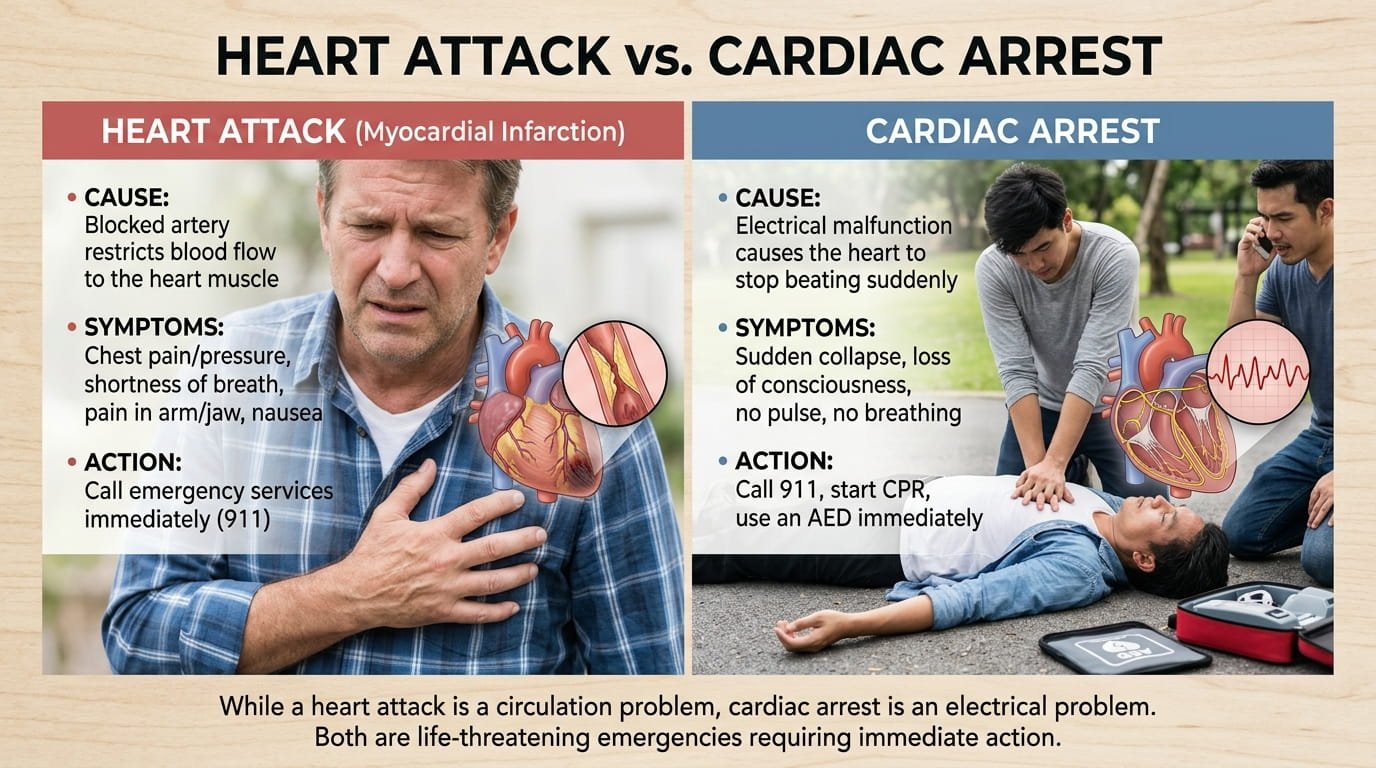
A heart attack, medically known as myocardial infarction, occurs when blood flow to a part of the heart muscle is blocked. This blockage is usually caused by a buildup of fat, cholesterol, and other substances that form plaque inside the coronary arteries. When this plaque ruptures or a blood clot forms, it reduces or completely stops blood flow to the heart muscle, leading to oxygen deprivation and damage to heart tissue. During a heart attack, the heart usually continues to beat, but part of the heart muscle becomes weak or damaged due to lack of oxygen. This is why a heart attack is considered a circulation problem rather than an electrical failure.
What is Cardiac Arrest?
Cardiac arrest is a sudden loss of heart function caused by an electrical failure in the heart. The heart depends on electrical signals to maintain a normal rhythm and pump blood throughout the body. When these signals fail or become irregular, the heart suddenly stops beating effectively. This leads to immediate loss of blood flow to the brain and other vital organs, causing the person to collapse, lose consciousness, and stop breathing. Without immediate treatment such as CPR or defibrillation, cardiac arrest can become fatal within minutes. Unlike a heart attack, cardiac arrest is not caused by a blockage but by an electrical malfunction of the heart.
Cardiac Arrest vs Heart Attack Difference
The difference between cardiac arrest vs heart attack lies in the type of failure occurring in the heart. A heart attack is a circulation problem caused by blocked arteries that restrict blood flow to the heart muscle. The heart continues to beat, but part of it is damaged due to lack of oxygen. Cardiac arrest, however, is an electrical problem where the heart’s rhythm becomes abnormal or completely stops, leading to a sudden loss of pumping function. In simple terms, a heart attack affects blood flow while cardiac arrest affects the heart’s electrical system.
Symptoms of Heart Attack vs Cardiac Arrest
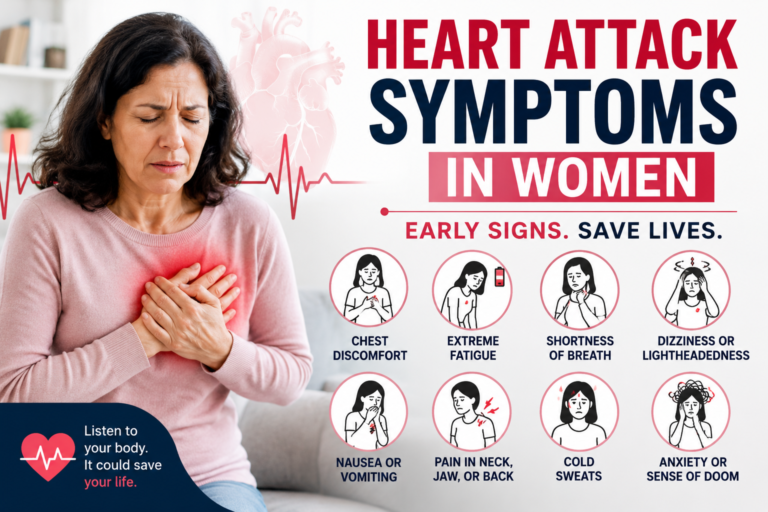
The symptoms of heart attack vs cardiac arrest are significantly different, although some warning signs may overlap. A heart attack often develops gradually and may include chest pain or pressure, pain spreading to the arm, jaw, neck, or back, shortness of breath, cold sweating, nausea, dizziness, and fatigue. These symptoms may last for several minutes or come and go over time. Cardiac arrest, on the other hand, occurs suddenly and without warning. The person collapses immediately, loses consciousness, has no pulse, and stops breathing. It is a critical emergency that requires immediate CPR and defibrillation to increase survival chances.
Sudden Cardiac Arrest vs Heart Attack
Sudden cardiac arrest vs heart attack is an important distinction because sudden cardiac arrest happens instantly without warning signs. It occurs when the heart suddenly stops beating due to an electrical failure. The person collapses within seconds and requires immediate medical intervention. A heart attack may develop gradually and often shows warning symptoms before becoming severe. In some cases, a severe heart attack can lead to cardiac arrest, but both conditions are still medically different.
Heart Attack vs Cardiac Arrest vs Stroke
Heart attack vs cardiac arrest vs stroke is another commonly searched comparison because these three conditions are often misunderstood. A heart attack affects the heart due to blocked blood flow in the coronary arteries. Cardiac arrest is caused by an electrical failure of the heart that stops its pumping function. A stroke affects the brain when blood flow is blocked or when a blood vessel bursts. Although all three are medical emergencies, they affect different organs and require different treatments.
Causes, Risks and Medical Differences – Cardiac Arrest vs Heart Attack
Causes of Heart Attack vs Cardiac Arrest
The causes of heart attack vs cardiac arrest are fundamentally different even though both involve the heart. A heart attack happens when blood flow to the heart muscle is blocked. This blockage is usually caused by coronary artery disease, where fatty deposits called plaque build up inside the arteries over time. When a plaque ruptures, it can form a blood clot that restricts or completely blocks blood flow, leading to damage in the heart muscle due to lack of oxygen.
Cardiac arrest, on the other hand, is caused by an electrical failure in the heart. The heart depends on electrical signals to maintain a normal rhythm. When these signals become chaotic or stop completely, the heart suddenly stops pumping blood. This leads to immediate collapse and loss of consciousness. In some cases, a severe heart attack can trigger cardiac arrest.
Risk Factors for Heart Attack vs Cardiac Arrest
The risk factors for both conditions overlap but are not identical. Heart attack risk factors include high blood pressure, high cholesterol, smoking, diabetes, obesity, poor diet, and lack of physical activity. These factors contribute to the gradual narrowing of arteries over time.
Cardiac arrest risk factors include previous heart attacks, heart failure, coronary artery disease, genetic heart rhythm disorders, and structural heart problems. Drug abuse or extreme physical stress can also increase the risk of sudden cardiac arrest. Unlike heart attack, cardiac arrest is more related to sudden electrical instability rather than long-term blockage.
Sudden Cardiac Arrest vs Heart Attack
Sudden cardiac arrest vs heart attack is an important distinction because sudden cardiac arrest occurs without warning. The heart suddenly stops beating due to an electrical malfunction, causing immediate collapse, unconsciousness, and loss of breathing. Immediate CPR and defibrillation are required for survival.
A heart attack may develop gradually and often shows warning signs such as chest pain, shortness of breath, or discomfort in the upper body. Although serious, a heart attack allows more time for medical intervention compared to cardiac arrest.
Heart Attack vs Cardiac Arrest vs Stroke
Heart attack vs cardiac arrest vs stroke is a commonly searched comparison because these conditions are often confused. A heart attack affects the heart due to blocked blood flow. Cardiac arrest affects the heart’s electrical system, causing it to stop pumping. A stroke affects the brain when blood flow is interrupted or when a blood vessel bursts.
Even though all three are medical emergencies, they affect different organs and require different treatments.
Heart Attack vs Cardiac Arrest vs Heart Failure
Heart attack vs cardiac arrest vs heart failure is another important medical comparison. Heart failure is a long-term condition in which the heart becomes weak and cannot pump blood effectively. It develops gradually over time due to conditions such as high blood pressure or previous heart damage.
A heart attack is a sudden event caused by blockage of blood flow. Cardiac arrest is a sudden electrical failure that stops the heart completely. Heart failure increases the risk of both heart attack and cardiac arrest but is not the same condition.
Massive Heart Attack vs Cardiac Arrest
A massive heart attack vs cardiac arrest comparison shows how closely these conditions are linked. A massive heart attack refers to a severe blockage affecting a large portion of the heart muscle. This can cause extensive damage and reduce heart function significantly. In some cases, it can trigger cardiac arrest due to electrical instability.
Cardiac arrest, however, is an immediate electrical failure where the heart stops pumping entirely. Without immediate CPR or defibrillation, survival chances drop rapidly.
Cardiac Arrest vs Heart Attack Which is Worse
When comparing cardiac arrest vs heart attack which is worse, cardiac arrest is generally more immediately life-threatening. This is because the heart stops beating completely, cutting off oxygen supply to the brain and body within seconds. Without immediate intervention, death can occur very quickly.
A heart attack is also serious but often develops with warning signs, allowing time for treatment and higher survival chances if medical help is received early.
Emergency Response, Treatment and Survival – Cardiac Arrest vs Heart Attack
Emergency Treatment for Heart Attack vs Cardiac Arrest
The treatment approach for heart attack vs cardiac arrest is completely different because both conditions involve different types of failure in the heart.
A heart attack is treated by restoring blood flow to the heart muscle as quickly as possible. In most cases, doctors use medications such as clot-busting drugs or perform emergency procedures like angioplasty and stent placement to open blocked arteries. The main goal is to reduce damage to the heart muscle by restoring oxygen supply as early as possible.
Cardiac arrest, however, is treated as an immediate life-threatening emergency where the heart has stopped functioning. The priority is to restart the heart as quickly as possible using cardiopulmonary resuscitation (CPR) and defibrillation. CPR helps maintain blood flow to the brain and organs until professional medical help arrives, while defibrillation delivers an electric shock to restore normal heart rhythm.
CPR and Why It Matters in Cardiac Arrest
In cases of cardiac arrest, CPR is one of the most critical life-saving techniques. When the heart stops beating, blood circulation also stops, which means oxygen cannot reach the brain or other vital organs. Brain damage can begin within minutes, making immediate action essential.
CPR helps manually pump blood through the body by pressing on the chest in a rhythmic motion. This keeps oxygen circulating until the heart can be restarted. The survival rate of cardiac arrest depends heavily on how quickly CPR is started and whether a defibrillator is available.
This is why cardiac arrest vs heart attack is often discussed in emergency medicine training, as immediate response techniques are completely different.
Survival Rate: Heart Attack vs Cardiac Arrest
The survival rate of heart attack vs cardiac arrest varies significantly based on response time and treatment availability.
Heart attack survival rates are generally higher because symptoms often develop gradually, allowing patients time to seek medical help. When treated quickly, especially within the first few hours, heart attack patients have a good chance of recovery with minimal long-term damage.
Cardiac arrest survival rates are much lower because the condition occurs suddenly and requires immediate intervention. Without CPR or defibrillation within minutes, survival chances decrease rapidly. The brain begins to suffer irreversible damage if oxygen flow is not restored quickly.
This is why cardiac arrest is considered more immediately fatal compared to a heart attack.
Heart Attack vs Cardiac Arrest vs Stroke in Emergency Context
In emergency situations, heart attack vs cardiac arrest vs stroke is an important comparison because all three conditions require different responses.
A heart attack requires immediate hospital transport for procedures that restore blood flow to the heart. Cardiac arrest requires instant CPR and defibrillation before hospital treatment can even be effective. A stroke requires rapid medical attention to restore or manage blood flow to the brain and prevent long-term neurological damage.
Although all three are emergencies, cardiac arrest is the most time-critical because it leads to complete cessation of blood circulation.
Prevention of Heart Attack and Cardiac Arrest
Preventing heart attack and cardiac arrest involves maintaining heart health and reducing risk factors that contribute to both conditions.
A healthy lifestyle plays a key role in prevention. Regular physical activity, a balanced diet low in saturated fats, avoiding smoking, and controlling blood pressure and cholesterol levels significantly reduce the risk of heart attack. Managing diabetes and maintaining a healthy weight also helps protect heart health.
For cardiac arrest, prevention includes identifying underlying heart conditions early. People with heart disease or rhythm disorders may require medications or implanted devices to regulate heart rhythm. Regular medical checkups are essential for individuals at higher risk.
Although not all cases can be prevented, reducing risk factors can significantly lower the chances of both conditions.
Medical Awareness and Importance of Early Recognition
Understanding the difference between cardiac arrest vs heart attack is essential for early recognition and response. Many deaths occur because symptoms are ignored or misunderstood.
Recognizing chest pain, shortness of breath, and discomfort as potential heart attack symptoms can lead to early medical intervention. Similarly, knowing that sudden collapse and loss of pulse indicate cardiac arrest can help bystanders take immediate action such as calling emergency services and starting CPR.
Medical organizations like the American Heart Association and Red Cross emphasize that early response is the key factor in survival for both conditions.
Final Conclusion
Cardiac arrest and heart attack are both serious medical emergencies, but they are fundamentally different in cause, mechanism, and treatment. A heart attack is caused by a blockage in blood flow to the heart muscle, while cardiac arrest is caused by an electrical failure that stops the heart from beating. Stroke, on the other hand, affects the brain and is a separate condition.
Heart attacks often develop with warning signs and allow more time for treatment, whereas cardiac arrest occurs suddenly and requires immediate CPR and defibrillation. Understanding these differences is critical because timely recognition and response can save lives.
Frequently Asked Questions (FAQ)
What is cardiac arrest vs heart attack?
Cardiac arrest is an electrical failure of the heart that causes it to stop beating suddenly, while a heart attack is caused by a blockage in blood flow to the heart muscle.
What is the main difference between cardiac arrest vs heart attack?
The main difference is that a heart attack is a circulation problem, while cardiac arrest is an electrical problem that stops the heart completely.
Can a heart attack lead to cardiac arrest?
Yes, a severe or massive heart attack can trigger cardiac arrest due to damage in the heart’s electrical system.
Which is more dangerous: cardiac arrest vs heart attack?
Cardiac arrest is more immediately dangerous because it stops the heart completely and can cause death within minutes if not treated.
What are the symptoms of heart attack vs cardiac arrest?
Heart attack symptoms include chest pain, shortness of breath, and sweating, while cardiac arrest causes sudden collapse, no pulse, and no breathing.
What should be done in cardiac arrest?
Immediate CPR and defibrillation are required to restart the heart and maintain blood circulation until emergency help arrives.
What is the difference between heart attack vs stroke vs cardiac arrest?
A heart attack affects the heart due to blocked blood flow, cardiac arrest is a sudden heart stoppage due to electrical failure, and a stroke affects the brain due to interrupted blood flow.
Is cardiac arrest always fatal?
Not always, but survival depends on how quickly CPR and defibrillation are performed.