6 Signs of Heart Attack a Month Before
A heart attack does not always happen without warning. In many cases, the body gives signs weeks or even a month before a serious heart problem occurs. Sadly, many people ignore these early symptoms because they seem small or normal. Knowing these warning signs early may help save a life.
A heart attack happens when blood flow to the heart becomes blocked. This prevents oxygen from reaching the heart muscles. While some heart attacks happen suddenly, others develop slowly over time with symptoms that appear days or weeks earlier.
In this article, you will learn about the 6 signs of heart attack a month before it happens, why they occur, and when you should see a doctor.
What Is a Heart Attack?
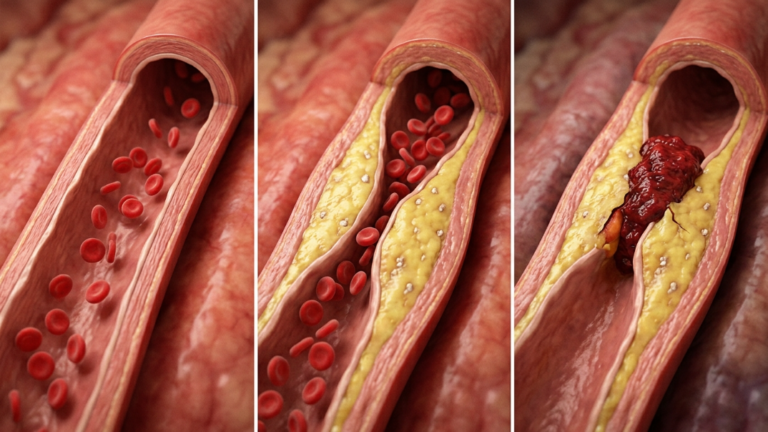
A heart attack, also called a myocardial infarction, happens when one or more arteries that supply blood to the heart become blocked. This blockage is usually caused by fat, cholesterol, and plaque buildup in the arteries.
Without enough oxygen-rich blood, the heart muscle can become damaged. Fast medical treatment is very important because it can reduce damage and improve survival.
Many people think heart attacks only happen to older adults, but they can affect both men and women of different ages, especially those with high blood pressure, diabetes, smoking habits, obesity, or stress.
Why Early Warning Signs Matter
The body often sends warning signs before a heart attack. Some symptoms may appear one month before the actual event. These signs may come and go, which makes them easy to ignore.
Recognizing early heart attack symptoms can help people get medical care sooner, reduce heart damage, prevent a major heart attack, and improve recovery chances.
Ignoring symptoms can be dangerous, especially if multiple signs happen together.
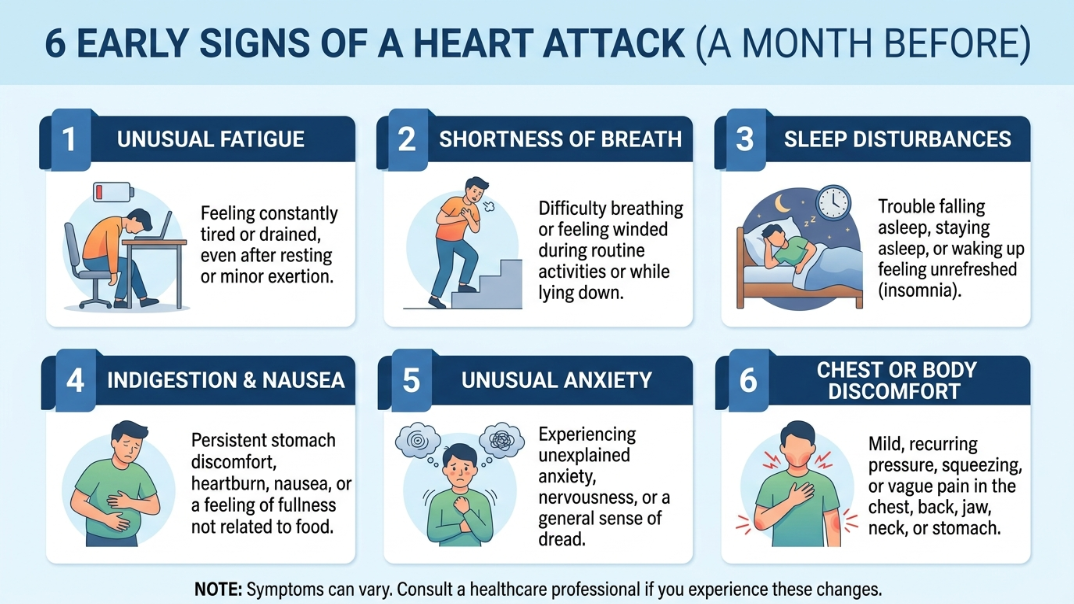
1. Unusual Fatigue
One of the most common early signs of a heart attack is unusual tiredness or fatigue. This is not the normal tired feeling after work or exercise. It is extreme exhaustion that happens without a clear reason.
Some people feel tired even after resting or sleeping well. Simple daily activities such as walking, climbing stairs, or carrying groceries may suddenly feel difficult.
Women especially report severe fatigue before a heart attack.
Signs of heart-related fatigue include feeling weak all day, having no energy for normal tasks, sudden exhaustion, and feeling tired after light activity.
Fatigue happens because the heart is struggling to pump blood properly throughout the body.
2. Chest Pain or Discomfort
Chest pain is one of the most well-known heart attack symptoms. However, before a heart attack, the discomfort may be mild and come and go.
Some people feel pressure in the chest, tightness, a burning sensation, fullness, or squeezing pain.
The pain may last for a few minutes and then disappear. Physical activity or stress can sometimes make it worse.
Do not ignore repeated chest discomfort, especially if it happens often over several weeks.
3. Shortness of Breath
Difficulty breathing can appear weeks before a heart attack. Some people feel out of breath even when they are resting or doing small activities.
This happens because the heart cannot pump blood effectively, causing less oxygen to move through the body.
Common symptoms include trouble breathing while walking, feeling breathless while lying down, tightness in the chest, and needing to rest more often.
Shortness of breath along with chest discomfort can be a serious warning sign.
4. Sleep Problems
Many people experience sleep disturbances before a heart attack. Poor blood circulation, stress on the heart, and breathing problems may affect sleep quality.
Some common sleep-related symptoms include trouble falling asleep, waking up often during the night, feeling anxious at night, sudden sweating during sleep, and feeling tired after sleeping.
Research shows that women often report sleep issues before experiencing a heart attack.
5. Pain in the Arm, Back, Neck, Jaw, or Shoulder
Heart attack pain does not always stay in the chest. It can spread to other areas of the body.
Many people feel discomfort in the left arm, both arms, upper back, neck, jaw, or shoulders.
The pain may feel dull, heavy, or sharp. Sometimes it comes and goes over several days or weeks.
This happens because nerves connected to the heart send pain signals to nearby body parts.
6. Dizziness, Nausea, or Cold Sweats
Feeling dizzy or suddenly sweating without reason may also be an early warning sign.
Some people feel lightheaded, sick to the stomach, cold sweats, sudden weakness, or fainting feelings.
These symptoms occur because reduced blood flow affects the brain and other organs.
If dizziness happens with chest pain or breathing trouble, seek medical help immediately.
Signs of Heart Attack in Women
Women may experience different heart attack symptoms than men. Their warning signs are often more subtle.
Common symptoms in women include extreme fatigue, nausea, sleep problems, back pain, jaw pain, and shortness of breath.
Because symptoms may not include severe chest pain, many women delay treatment. Early medical attention is very important.
Signs of Heart Attack in Men
Men are more likely to experience classic symptoms such as strong chest pain, left arm pain, sweating, and pressure in the chest.
However, men can also experience fatigue, breathing issues, and dizziness before a heart attack.
Risk Factors That Increase Heart Attack Chances
Several health and lifestyle factors increase the risk of heart disease.
Common risk factors include smoking, high blood pressure, diabetes, high cholesterol, obesity, lack of exercise, stress, poor diet, and family history of heart disease.
People with these risk factors should pay close attention to early symptoms.
When Should You See a Doctor?
You should contact a doctor if you notice frequent chest discomfort, unusual fatigue, breathing problems, pain spreading to the arm or jaw, or sudden dizziness.
Do not wait for symptoms to become severe. Early testing can identify heart problems before a major emergency happens.
Seek emergency help immediately if symptoms become intense or happen suddenly.
How to Reduce Heart Attack Risk
Healthy lifestyle habits can lower the chances of heart disease.
Simple prevention tips include eating healthy foods, exercising regularly, stopping smoking, managing stress, controlling blood pressure, maintaining a healthy weight, sleeping well, and limiting processed foods and sugar.
Regular health checkups are also important, especially after age 40.
Can Heart Attacks Be Prevented?
Not all heart attacks can be prevented, but many can be avoided through early detection and healthy habits.
Listening to your body and acting quickly when symptoms appear can save your life or the life of someone you love.
Final Thoughts
The body often gives warning signs before a heart attack happens. Symptoms such as unusual fatigue, chest discomfort, shortness of breath, sleep problems, body pain, and dizziness should never be ignored.
Knowing the 6 signs of heart attack a month before can help people get medical care early and reduce serious complications. Even mild symptoms may be important if they continue or happen together.
If you or someone you know experiences these warning signs, talk to a healthcare professional as soon as possible.
FAQs
Can a heart attack show symptoms a month before?
Yes, some people experience warning signs weeks before a heart attack, including fatigue, chest discomfort, and breathing problems.
What is the first warning sign of a heart attack?
Chest discomfort and unusual fatigue are among the most common early symptoms.
Do all heart attacks cause chest pain?
No. Some people, especially women, may experience nausea, fatigue, or jaw pain instead of severe chest pain.
Can stress increase heart attack risk?
Yes, long-term stress can increase blood pressure and strain the heart.
What should I do if I think I am having a heart attack?
Call emergency medical services immediately and seek urgent medical care.